What Any Brand Can Learn From Half a Shoe: What Chanel’s Viral Sandal Tells Us About Provocation as a Strategy
Mathieu Bonnin
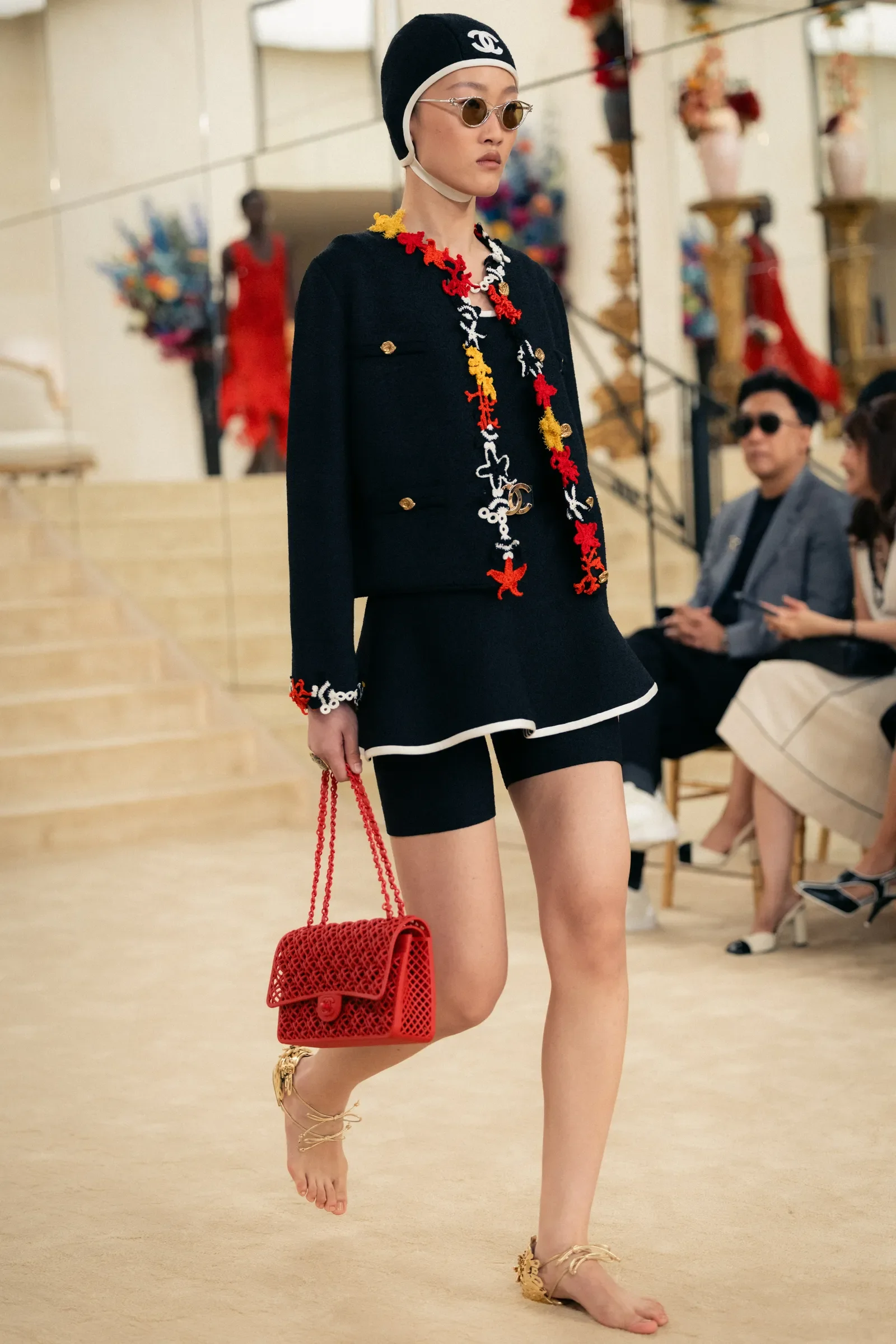
At Chanel’s Cruise 2027 show in Biarritz, Matthieu Blazy sent a model down the runway wearing what appeared to be a half shoe: a small leather heel cap, two ankle straps, and nothing in front. The entire front foot sole was fully exposed to the carpet beneath it. Chanel called it the “barefoot heel cap,” while the internet dubbed it “everything else.”
Within 48 hours, the shoe had garnered significant attention, receiving coverage from major news outlets like ABC News, NBC News, CBS Evening News, Fox Business, and CNN. It also sparked thousands of social media posts and memes, with comparisons to recession indicators and Pharaoh’s plagues. Remarkably, not a single one of these impressions cost Chanel a single dollar.
The Design That Was Never About Footwear
When a creative director pushes his team to go beyond their initial ideas, the product itself becomes secondary.
During the design process, Blazy encountered resistance from his team when they expressed concerns about the shoe’s boldness. However, he responded by finding a chaotic 1910 colorized photograph of striped Basque beach tents. He was captivated by the image’s chaotic and explosive nature and decided to proceed with the design. He exclaimed, “It’s such a mess, such an explosion! You know what? Let’s go!”
That moment is worth pausing to reflect on. This wasn’t a design decision made despite pushback; it was a deliberate choice made because of it. Blazy, trained under Martin Margiela and later at Bottega Veneta, possesses a keen understanding of the fine line between unsettling and provoking. He didn’t stumble over it; he intentionally stepped over it.
Elle described the sandal as “intentionally incomplete,” and this nuance is crucial. At a prestigious house like Chanel, nothing reaches the runway unfinished. Every decision undergoes rigorous review, refinement, and approval through one of the most stringent creative and commercial apparatuses in luxury fashion. “Intentionally incomplete” isn’t an apology; it’s a bold thesis.
The Name Behind the House
A creative director used to interpret a brand. Now they are one.
Tom Ford at Gucci. John Galliano at Dior. JW Anderson at Loewe. The pattern is consistent: the right creative director doesn't just serve a house, they redefine it. Their name becomes inseparable from the brand's identity, sometimes bigger than the brand itself. When Galliano fell, Dior didn't just lose a designer. It lost a point of view.
That dynamic has only accelerated. JW Anderson's move to Dior in 2025 was treated as a seismic event for both houses simultaneously. Kim Jones at Dior Men and Fendi shifted both brand, and his own name, in both directions. The relationship between a creative director and a house is now bilateral in a way it never used to be.
Matthieu Blazy arrived at Chanel in December 2024 as the first external designer to lead the house since Karl Lagerfeld. His background matters here. He trained under Martin Margiela (the designer who first turned deconstruction into a philosophy) at a time when Margiela's team was deliberately anonymous. Then he took Bottega Veneta, a house synonymous with quiet luxury and deliberate invisibility, and made it mainstream. The intrecciato weave that once signaled "I don't need a logo" became the logo. The barefoot heel cap follows the same logic: a designer shaped by Margiela's intellectual rigor, now operating inside the most commercially powerful fashion brand in the world. The idea didn't change. The distribution did. And that is his first loud statement that Chanel has a new point of view, from someone with the pedigree and conviction to own it.
What the Reaction Actually Proves
The outrage was not a byproduct. It was the mechanism at play.
The most frequently cited social media reactions are: “Recession indicators: half a shoe from Chanel” and “That’s not even a shoe, it’s a sh”. These reactions all assume the same thing: that this was a mistake, that Chanel miscalculated, and that the emperor has no clothes, or at the very least, no toe coverage.
However, this interpretation overlooks the actual events that transpired. As of the day following the show, the sandal had not been listed as a retail item, and no price had been announced. NBC News noted that “the publicity so far has been free”. A product that doesn’t exist yet has garnered mainstream news coverage across every major outlet. Every outraged tweet, every shared meme, and every article questioning Chanel’s sanity contributes to an impression. Each one reinforces the fact that the brand is doing something that cannot be ignored.
This same mechanism is responsible for certain private clubs posting nothing and yet dominating the conversation among their intended audience. Scarcity and provocation operate on the same principle: the audience’s need to react confirms that something of significant importance has occurred. Confusion, debate, outrage, and mockery are all forms of attention. And attention directed at the right audience is the currency that luxury brands thrive on.
What Any Brand Can Learn From Half a Shoe
The question isn’t whether your product is practical. It’s whether it’s undeniable.
Chanel didn’t release this sandal to address a practical footwear issue. Instead, they released it to provoke a conversation about luxury, about function, and about what a brand at this level is truly selling. The conversation unfolded on a massive scale, without any media expenditure. This outcome wasn’t accidental; it was the result of a creative director with unwavering conviction who overcame the instinct to be cautious and possessed a deep understanding of brand mechanics. They recognized that when provocation is specific and grounded, it leads to a significant reaction.
For brands outside the top tier of luxury fashion, the takeaway isn’t to create something impractical and label it as a strategy. The lesson is more applicable than that. The brands that generate the most organic conversations aren’t those optimizing for broad appeal. Instead, they’re the ones willing to make a decisive, specific choice and defend it; event, especially, when someone in the room criticizes it. The barefoot heel cap may never become a bestseller. However, it has already achieved more for Chanel’s cultural presence in a week than a year of standard campaign spending could replicate.
Matthieu Blazy’s most powerful brand statement in Biarritz wasn’t about shoes at all. It was about confidence. The confidence to present something on a runway that half the internet would mock, knowing the other half would remember it and that both halves would discuss Chanel.
